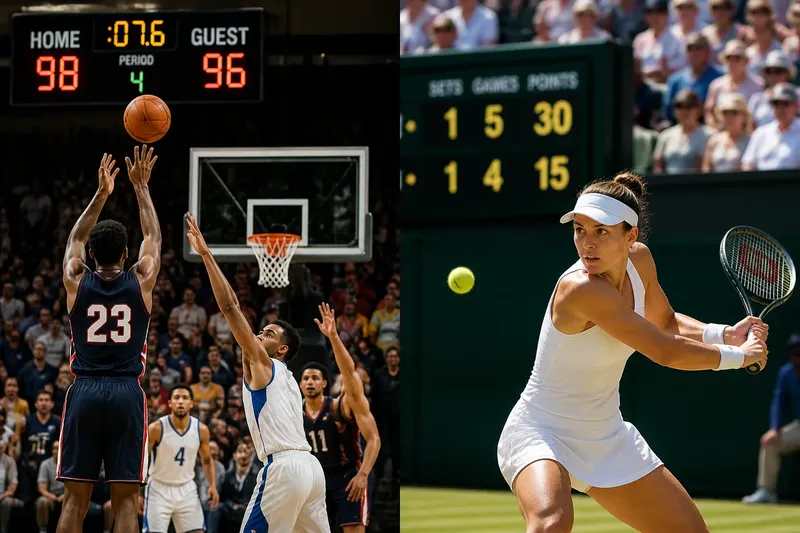
Why the Lines on a Court Matter More Than They First Seem
Court lines shape legal space and tactical choices. Learn how to read boundaries, zones and markings so the action makes sense from the stands.
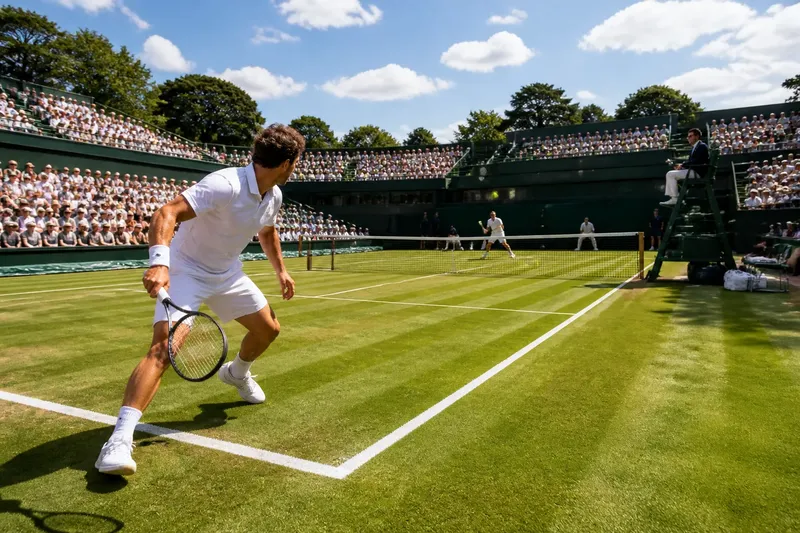
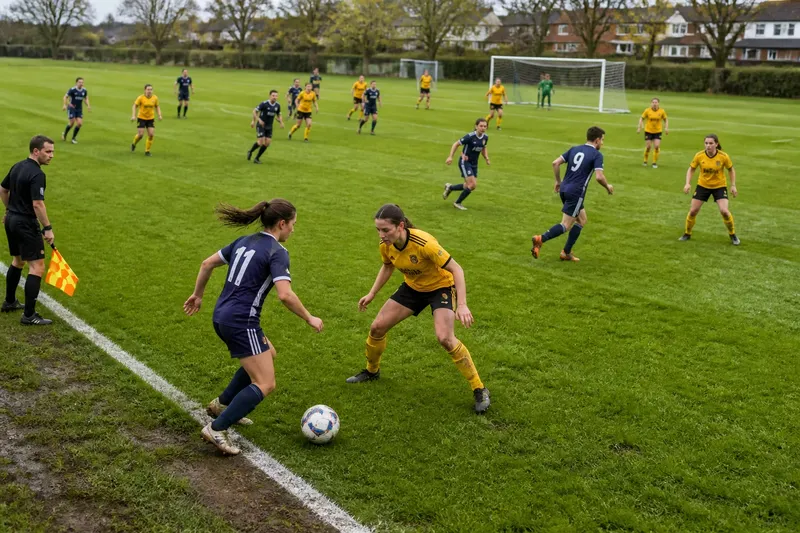
A player plants a foot beside a painted sideline, glances down, then changes direction as the ball travels elsewhere. Court lines can decide whether play continues, where a player may stand and what spectators should watch next. Follow their role through a sequence of play, rather than treating them as decoration.
Read the court layout
Before play begins, notice how the surface is divided. The outer boundary marks the playing area; inner lines may identify service areas, scoring zones, restricted spaces or positions for restarting play. Their meanings depend on the sport, so the same coloured stripe can serve different purposes on different courts.
Start with the lines that enclose the court. A ball or player crossing one may be out, but the precise call depends on the sport and situation. In tennis, a ball touching a boundary line is generally in. In basketball, a player who is out of bounds while touching the ball can cause it to be ruled out, so the player’s position and contact with the boundary matter.
Then identify the centre line, end lines and any distinctive marked areas. Trace a line from the middle of the court towards an edge: notice where it stops, what it divides and which players use the space beside it. This gives you a map for following later decisions.
For a quick first look, locate the outer boundary, centre markings and the most prominent inner zone.
Separate marked zones
Inner markings make particular spaces legally or tactically distinct. A painted basketball key, a tennis service box or a crease in another court sport can affect where a player may go, when an action is allowed or where a point begins. The line is a visible cue; the sport’s rules give it meaning.
Do not assume that every marked area is forbidden. Some zones restrict a player only during a specific phase, while others define where a serve must land or where a restart takes place. Watch for the action that activates a marking: a serve, a shot, a player’s entry or a change of possession.
In basketball, the key is not a general no-entry zone. Under common rules, offensive players are restricted from remaining in the opposing team’s lane for too long while their team controls the ball in the frontcourt; the applicable time limit and details vary by competition. A defender may occupy the lane, and the restriction concerns the offensive player’s time there, not simply stepping across the painted line. Watch when possession and the attacking phase begin, then notice whether an offensive player leaves the lane before the relevant limit.
Ask what the zone changes: permission, position, direction or the place where play resumes.
Follow one court line
Track one line through a short passage of action. Choose a boundary or inner marking, then note who approaches it, what happens when they cross it and whether the next action changes. This makes the court’s geometry easier to read than trying to memorise every line at once.
During a serve, follow the relevant service markings. In tennis, the server’s position and the receiving service box help define a legal delivery. A serve that lands beyond the relevant box is treated differently from one that lands inside it, so the lines tell you what the receiver must answer.
During a rally, shift attention to the edges. A player near a sideline may be choosing a safer direction or trying to send the ball towards a difficult angle. The boundary gives that choice a limit: a shot can be hard to reach but still fail if it lands out.
When play stops, look at the markings around the restart. The position of a throw-in, serve or other resumption can shape the next exchange, even when the previous play has ended. Lines organise not only movement during a rally but also how action begins again.
Pick one marking and watch what it changes before moving your attention elsewhere.
See the choices lines create
Boundaries turn open space into a set of trade-offs. A player can aim close to an edge to make an opponent cover more ground, but a shot near the line is easier to send out. A shot towards the middle may give the opponent more room to respond, yet it is less exposed to the boundary.
Inner zones create different choices. If a marking limits where a player may stand, they may need to time an entry or move out before a particular action. If a zone defines a target, players can direct the ball towards it or position themselves to defend it. The geometry gives both sides a shared problem to solve.
Say you are watching tennis and a player is pulled towards the sideline. They choose a cross-court reply aimed close to the opposite boundary, hoping to make their opponent move farther; if the ball lands beyond the line, the risk has cost them the point. The visible trade-off is reach against control, not a promise that a narrow angle will succeed.
Lines also help spectators understand positioning. A player who retreats from a marked area may be preserving a legal position; another who advances towards it may be preparing to attack. You do not need every tactical term to notice the relationship between a player, a line and the next action.
Ask yourself what would change if this line were not here. The answer often reveals whether it limits a player, defines a target or makes a decision visible.
Why do court lines matter?
Does touching a line count as in?
It depends on the sport and the marking. In tennis, a ball touching a boundary line is generally in, while other sports apply their own rules to a player, ball or foot at the edge.
Why are some court zones shaded?
Shading can make a zone easier to identify, but colour alone does not establish its rule. Check how players use the area and what action is taking place before deciding what the marking means.
Can a court have overlapping lines?
Yes. Shared indoor courts may carry markings for more than one sport, sometimes in different colours. Follow the lines used by the game in progress rather than assuming the most prominent ones apply.
Why do players look down near a line?
They may be checking their position, judging whether a ball landed within the playing area or preparing for a restart. The glance is useful because the court’s boundary can affect what they are allowed to do next.
When markings compete
On a shared court, several sets of lines may cross or run close together. A bright colour can help distinguish one sport’s layout from another, but worn paint, glare or a crowded surface may make the pattern hard to follow. First identify the sport being played, then trace the markings that match its court layout.
If you are unsure which line matters, look for repeated use rather than guessing from colour. Players and officials orient themselves around the markings relevant to that game. The surface, local setup and sport’s rules can differ, so use the venue’s guidance or governing rules when a precise ruling matters.
For a casual viewer, keep two questions in mind: which line defines the playing area, and which inner marking affects the current action? That distinction prevents the whole surface from becoming a confusing grid.
Build a viewing routine
At your next match, begin with the outer boundary, then choose one inner marking and follow it through a serve, rally or restart. Once its effect becomes clear, compare it with another zone rather than trying to decode every stripe at once.
- Check which outer boundary is nearest the action; if the ball or player approaches it, watch for an in-or-out decision, otherwise keep following the exchange.
- Check whether the relevant ball or player touches or crosses the boundary; if the sport’s rule makes that contact decisive, watch for a stoppage or call, otherwise track the next movement.
- Check which inner zone is involved; if the current action activates a restriction or target, watch the player’s position against it, otherwise set that marking aside.
- Check whether a serve is in progress; if so, follow the server’s position and the receiving box for a fault or legal delivery, otherwise return your attention to the rally.
- Check whether play has stopped; if a restart uses a marked position, watch where the action resumes, otherwise continue tracking the live play.
- Check whether several colours of lines cross; if the court is shared, follow the markings for the sport being played, otherwise use the clearly relevant court layout.
Imagine you are watching a volleyball rally on a shared indoor court. The invented starting situation is a ball travelling towards a sideline while several colours of paint cross nearby. First, identify volleyball as the game in progress and ignore markings for other sports; next, track the volleyball court’s outer boundary; then watch where the ball lands in relation to that line. If it lands beyond the boundary, expect play to be called out under the applicable rules; if it lands on or inside the line, expect the rally to continue, subject to the game’s other rules. The result is a clearer view of that decision without having to follow every player at once.
Once you can read court lines, watch how players use them to balance reach against risk. A boundary is not merely where play ends: it helps define the choices that make the next move intelligible. When you want to understand why lines on a court matter, connect each marking to the action taking place around it.